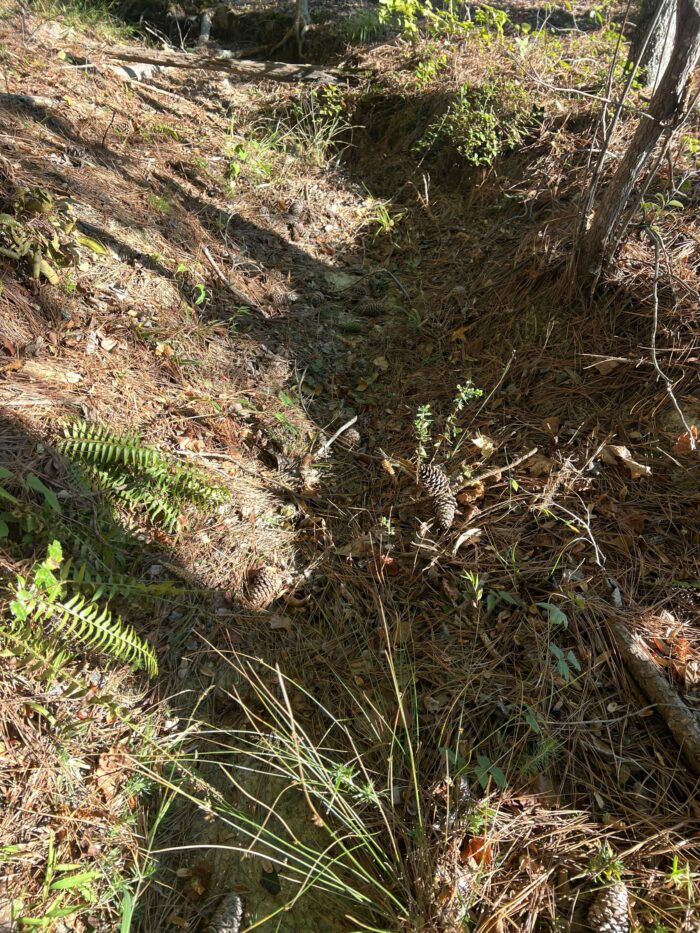
Stream or Not a Stream
It is easy to remember we are experiencing a drought when we see our landscape dry up. We can hardly keep our spring plantings alive, much less thrive, in these conditions.
Many of our native species go dormant to survive the undependable spurts of rain. You might think the trees, shrubs, and smaller species are dead, but they are hunkered down waiting for wetter times.
Wetlands and streams can respond in much the same way. It is challenging to determine if they exist if there is no water. When in reality, their presence and function are alive in the landscape.
This makes wetland and stream delineations challenging during times of drought. Under normal conditions, the presence of water can be an important indicator.
This is where experience becomes especially important. Instead of relying on water alone, we look for other physical indicators that tell the story of how water moves through the landscape. Soils, vegetation, topography, channel characteristics, bug life, and other site features help us understand what may not be immediately visible.
Our experience allows us to look beyond what is visible and evaluate the collection of indicators that help define wetlands and streams. Even under challenging conditions, a careful delineation can provide the information needed to understand what is—and what is not—present on a property.
Getting it right matters. Intermittent and perennial streams carries more regulatory weight than an ephemeral one and is subject to buffer rules in many NC counties, which can affect how a property is developed.
Just as a dormant plant is still alive, a stream or wetland can remain an important part of the landscape even when it is not holding water.
A version of this article can be seen in our quarterly newsletter. Sign up to stay up to date and learn valuable tips.